Rick Bragg,
The Prince of Frogtown (Random House Audio, 2008) 7 hours 59 minutes.
Frogtown was the name of a Jacksonville, Alabama working class neighborhood where Rick Bragg’s father grew up. In this third in a trilogy on his family, Bragg seeks to understand his abusive and alcoholic father. Although he’s never able to redeem him, Bragg interviews relatives and friends of his deceased father in an attempt to learn more about the man. With chapters that jump back and forth, Bragg tells his father’s story (and some of his own) as well as inserting his own battles with helping raise a step-son. The methodology works surprisingly well, probably because Bragg refers to his step-son as “the boy” and his wife as “the woman,” which keeps the primary focus on the story of his dad and family. Instead of learning the details about Bragg’s current family, we learn about his father and the family he grew in as well as a bit about how about how fathers relate to sons and also about how things have changed in the rural South. Listening to the author read, in audio version of the book, provides an additional treat as we hear Bragg’s soft southern voice.
Bragg begins telling about a family gathering at a spring, a special place where “a boy, a genuine boy, can have no real fun with so many Presbyterians puttering around and so many mammas in one tight place.” I almost gave the book up right then and there, with his digs about Presbyterians. But Bragg is an equal rights offender and before he was done writing, he’d poked fun of the Methodists and Baptists and most other religious groups of the South. His description of the men who’d gathered there is especially telling:
“Some were saved, some backsliders and some yet unaffiliated, but even the men that walked in the holy of holies didn’t preach to the others out of respect—if you went to work and fed your babies, you were already half way home. So they spoke of the secular, of the secrets of fuel injection and how to put on brake shoes.”
At the time of the described event, Charles, Rick’s father, stood among such men, but his standing there wouldn’t last long. Charles had killed a man in Korea, holding his head under water till he drowns, an event that earned him the right to a drink. But he became a drunk. However, before that, he was the man who would bring the girl who’d become Rick’s mother roses (which he picked from someone else’s yard). He courted her in his shinny car, which always looked good even though it burnt so much oil that he’d just get a bucket-full of spent oil from the service station and pour it into the engine. Looks matter more than performance. As a Marine, he wooed her with his daily letters. They got married and she began having babies, and he drank more and more and the abuse got worse and worse and one day his mother had enough.
In telling the story of his father, Bragg also tells the story of the region. He’s descended from folks who fought with Andy Jackson in his campaign to clear out the Indians, yet most of them are a 1/8 or a 1/16th Indian. They were so poor they couldn’t even afford to buy the land at a government auction after Jackson’s sent the native tribes west on the Trail of Tears. Then along came the “rich man’s war” and the sharecroppers marched off into “one of the true oddities in Southern history—to fight for a way of life that was closed off to them.” Bragg notes that these men had as much “war whoop” as “Rebel yell” in them. “It was the fight, not the cause…” Racism ensured after the war as poor whites and blacks struggled over meager resources. Then along came the mills. The mill meant salvation to the hard working farmers and sharecroppers of the region. “The cost would be terrible, but it would be salvation just the same.” Yet Charles Bragg, unlike his family, knew better than to go into the mill. As a child, seeing a one-armed man, Rick asked his mamma if it was the war. “No,” she said, “the mill.” This man had been the best guitar picker around and had been invited to Nashville, but couldn’t go for if he laid out a day, he’d be fired. Rick recalls being told that “everything he needed to know about the mill could be found in that empty sleeve.” Agreeing, he notes there is “something wrong with a place that keeps a part of you after quittin’ time.”
One of the most moving parts of the book is where Rick interviews family members and friends to learn about his dad. His dad’s best friend, Jack, tells about how Charles called him from the TB sanatorium. He wanted his friend to “bust him out,” but Jack said he couldn’t do it, that he’d be arrested. In telling the story, three decades after Charles’ death, Jack’s heart was still aching. Recalling the last time he’d seen his dad, right before his death, Rick remembers him looking like a “burned up house.” Charles Bragg died in the winter of ’75. Rick was in High School. Charles had asked not to be buried in a tie, but the undertaker dressed him up in one anyway, a clip-on. Right before they closed the casket, Charles’ mother pulled the tie off, saying it was the last thing she could do for her son…
As the book continues, Bragg tells about his mother and the house he brought for her and how she and his younger brother lives. His younger brother, who never knew his dad, has followed his ways and has been in prison, but Rick and his mom now hopes he’s beat it. Flowers grow everywhere his mom walks on her land, but there’s not a single rose.
I enjoyed the storytelling in this book. Rick Bragg has a wonderful way of painting pictures and telling stories with words. Although there seemed to be a few “extra parts” in the book (like a long ending that took us through his brother’s release from prison), I enjoyed listening to it so much that I brought a paperback copy of
Ava’s Man and read it while flying back from Mexico. I recommend both books.
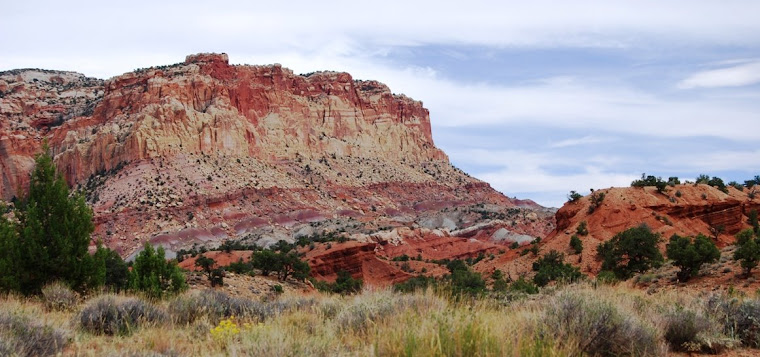


 A closing shot. You can enjoy these photos without local craftsmen trying to gain your business, crying out as you approach: "one dollar, one dollar." If you ignore them, as you walk away they change their pitch to "ten pesos, ten pesos," amounting to a 30% drop in price! I couldn't believe how many vendors they allowed inside the grounds. They line the paths between the various parts of the site. I've also visited Copan, another Mayan center in Honduras. There, I only remember vendors outside the gate. Once you were inside, you were free to look at the sights without having to beat off salespeople.


